Education
Quanto apostar por aposta? 0,5%, 1%, 2% ou mais?
Quinta-feira, 27 de agosto de 2026
Depois de definir a bankroll, surge imediatamente outra pergunta essencial:
Quanto devemos apostar em cada aposta?
0,5% da bankroll?
1%?
2%?
5%?
Ou mais?
Essa decisão pode parecer secundária quando comparada à escolha das apostas.
Na realidade, ela é fundamental.
Dois apostadores podem seguir exatamente a mesma estratégia, apostar nas mesmas odds e obter os mesmos resultados.
No entanto, se um arrisca 1% da bankroll por aposta e o outro arrisca 5%, a evolução financeira de ambos pode ser completamente diferente.
O tamanho da stake influencia diretamente:
- a velocidade potencial de crescimento da bankroll;
- o tamanho dos drawdowns;
- a capacidade de suportar sequências de perdas;
- o risco de ruína;
- a pressão psicológica causada pelas oscilações do capital.
Neste terceiro artigo da nossa série sobre gestão de bankroll nas apostas esportivas, vamos comparar diferentes tamanhos de stake e entender por que apostar mais não significa necessariamente ganhar mais no longo prazo.
O tamanho da aposta deve sempre ser comparado à bankroll
O valor de uma aposta, analisado isoladamente, diz muito pouco.
Uma aposta de R$ 500 pode ser extremamente conservadora para um apostador e muito agressiva para outro.
Tudo depende do tamanho da bankroll.
Vamos comparar dois apostadores.
Apostador A
Bankroll:
R$ 100.000
Aposta:
R$ 500
A aposta representa:
0,5% da bankroll
Apostador B
Bankroll:
R$ 5.000
Aposta:
R$ 500
A aposta representa:
10% da bankroll
O valor em reais é exatamente o mesmo.
Mas o nível de risco é completamente diferente.
Por isso, o tamanho da aposta deve ser sempre analisado como um percentual da bankroll.
Nossa bankroll de referência: R$ 30.000
Como nos dois primeiros artigos, vamos utilizar nossa bankroll fictícia de:
R$ 30.000
Comparemos diferentes tamanhos de stake.
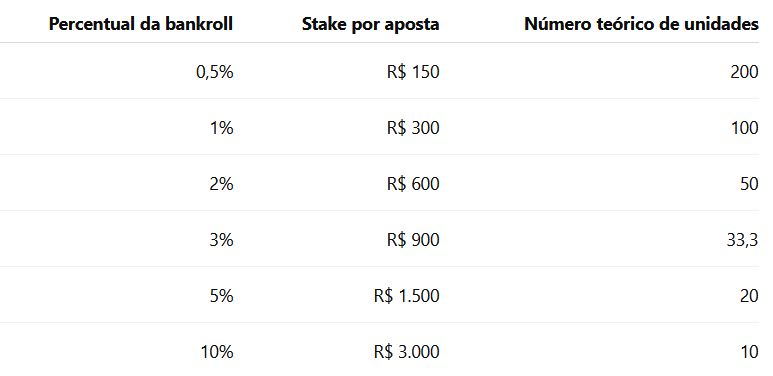
Essa tabela mostra imediatamente um ponto importante.
Quanto maior for a stake em relação à bankroll, menor será o número de unidades disponíveis para absorver a variância.
Com uma stake de 0,5%, a bankroll possui:
200 unidades
Com 1%:
100 unidades
Com 2%:
50 unidades
Com 5%:
apenas 20 unidades
A diferença é significativa.
Apostar 0,5% da bankroll por aposta
Com nossa bankroll de R$ 30.000:
0,5% = R$ 150 por aposta
Isso corresponde a:
200 unidades de capital
É uma abordagem relativamente conservadora.
Ela oferece várias vantagens:
- maior capacidade de suportar sequências negativas;
- drawdowns menores em termos relativos;
- menor pressão psicológica;
- melhor resistência em estratégias voláteis;
- mais flexibilidade ao combinar várias estratégias.
Mas existe também uma desvantagem evidente:
o crescimento da bankroll será mais lento com o mesmo desempenho.
Suponha que uma estratégia obtenha:
+20U
Com uma unidade de R$ 150:
20 × R$ 150 = +R$ 3.000
A bankroll passa de:
R$ 30.000 para R$ 33.000
ou seja:
+10%
É uma abordagem prudente, mas o crescimento do capital é naturalmente mais lento do que com stakes maiores.
Apostar 1% da bankroll por aposta
Com nossa bankroll de referência:
1% = R$ 300
Esse é o modelo que utilizamos desde o início desta série.
A bankroll contém então:
100 unidades
Essa estrutura oferece um equilíbrio interessante entre:
crescimento potencial
e
capacidade de absorver a variância.
Também é muito prática para analisar o desempenho.
Com:
1U = R$ 300
um resultado de:
+10U
equivale a:
+R$ 3.000
ou:
+10% da bankroll inicial
Um resultado de:
-10U
equivale a:
-R$ 3.000
ou:
-10%
Essa simplicidade é uma das razões pelas quais o modelo 1% = 1 unidade é particularmente útil como referência didática.
Mas isso não significa que 1% seja automaticamente o tamanho ideal para todas as estratégias.
Apostar 2% da bankroll por aposta
Com uma bankroll de R$ 30.000:
2% = R$ 600
A bankroll contém agora apenas:
50 unidades
As oscilações se tornam duas vezes maiores do que com uma stake de 1%.
Vamos considerar uma sequência de 10 perdas em um exemplo simplificado com stakes fixas.
Com 1%:
10 × R$ 300 = -R$ 3.000
ou:
-10% da bankroll inicial
Com 2%:
10 × R$ 600 = -R$ 6.000
ou:
-20%
A estratégia não mudou.
As apostas não mudaram.
A única diferença é a gestão do capital.
Ainda assim, o drawdown é duas vezes maior.
Por isso, passar de 1% para 2% não deve ser considerado um pequeno ajuste.
O perfil de risco muda de forma significativa.
E se apostarmos 3%, 5% ou mais?
Aqui as consequências se tornam muito mais importantes.
Com nossa bankroll de R$ 30.000:
Stake de 3%
R$ 900 por aposta
10 perdas:
-R$ 9.000
ou:
-30% do capital inicial
Stake de 5%
R$ 1.500 por aposta
10 perdas:
-R$ 15.000
ou:
-50% do capital inicial
Stake de 10%
R$ 3.000 por aposta
10 perdas:
-R$ 30.000
Em um modelo simplificado com stakes fixas calculadas sobre a bankroll inicial, todo o capital seria perdido.
Esse exemplo mostra por que stakes muito altas podem ser extremamente perigosas.
Uma estratégia lucrativa no longo prazo pode perfeitamente enfrentar 10 perdas consecutivas ou mais, dependendo das odds e da taxa de acerto.
O problema não precisa estar na estratégia.
Pode estar simplesmente no tamanho das apostas.
Comparando uma sequência de 10 perdas
Com uma bankroll inicial de R$ 30.000 e stakes fixas:

As apostas escolhidas são exatamente as mesmas.
Só muda o tamanho da stake.
Esse é um dos exemplos mais claros da importância da gestão de bankroll.
Quanto maior o drawdown, mais difícil é recuperar
Existe outra consequência muito importante que costuma ser subestimada.
Depois de uma perda, é necessário obter um retorno percentual maior para voltar ao capital inicial.
Suponha uma bankroll de:
R$ 30.000
Perda de 10%
A bankroll cai para:
R$ 27.000
Para voltar a R$ 30.000, é necessário ganhar:
R$ 3.000
Isso representa:
+11,1%
sobre os R$ 27.000 restantes.
Perda de 20%
A bankroll cai para:
R$ 24.000
Agora é necessário:
+25%
para voltar a R$ 30.000.
Perda de 50%
A bankroll cai para:
R$ 15.000
Agora é necessário:
+100%
para recuperar o capital inicial.
Quanto maior o drawdown, mais desfavorável fica a matemática.
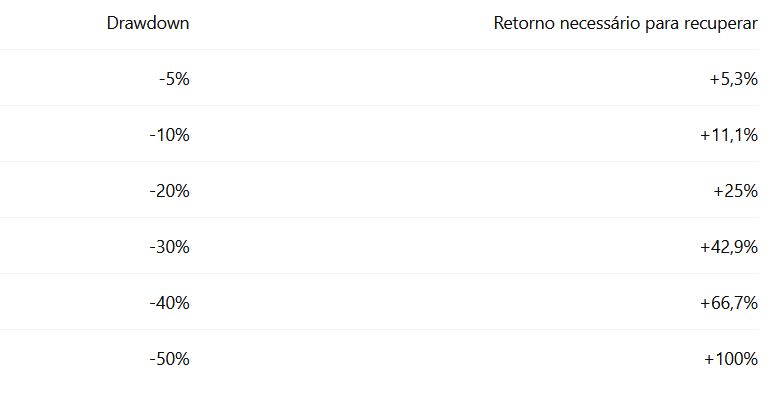
Essa assimetria é outro motivo importante para controlar o tamanho das apostas.
Por que apostar mais não significa necessariamente ganhar mais
À primeira vista, a lógica parece simples:
se uma estratégia é lucrativa, aumentar a stake deveria aumentar os lucros.
Durante um período positivo, isso é verdade.
Mas esse raciocínio ignora a variância.
Suponha que uma estratégia seja lucrativa no longo prazo.
Dois apostadores seguem essa estratégia.
Apostador A
1% por aposta
Apostador B
5% por aposta
Quando a estratégia atravessa uma excelente fase, o Apostador B faz sua bankroll crescer muito mais rapidamente.
Mas quando chega uma forte sequência negativa, as perdas também são cinco vezes maiores em relação ao capital inicial.
Isso pode gerar um drawdown grande o suficiente para:
- reduzir fortemente o capital disponível;
- afetar a tomada de decisões;
- levar ao abandono da estratégia;
- ou criar uma perda muito difícil de recuperar.
O objetivo de uma boa gestão de bankroll não é maximizar o resultado da próxima aposta.
É maximizar a capacidade de explorar uma vantagem durante um longo período de tempo.
O percentual ideal depende da variância da estratégia
Não existe um percentual ideal válido para todos os apostadores e todas as estratégias.
Uma estratégia com baixa variância pode, em determinadas situações, suportar uma stake maior do que uma estratégia altamente volátil.
É importante considerar fatores como:
- taxa de acerto;
- odds médias;
- distribuição das odds;
- volume de apostas;
- drawdowns históricos;
- correlação entre apostas;
- vantagem estimada da estratégia.
Vamos considerar um exemplo simples.
Uma estratégia que aposta principalmente em odds próximas de:
1,50
tende a apresentar uma taxa de acerto maior do que uma estratégia que aposta principalmente em odds próximas de:
5,00
A segunda estratégia pode ser perfeitamente lucrativa.
Mas também pode enfrentar sequências de perdas muito mais longas.
Usar exatamente o mesmo tamanho de stake nas duas estratégias sem analisar a variância seria uma simplificação excessiva.
A taxa de acerto importa muito
Vamos considerar duas estratégias teóricas.
Estratégia A
Taxa de acerto:
70%
Estratégia B
Taxa de acerto:
30%
Mesmo que ambas tenham valor esperado positivo, suas sequências de resultados podem ser completamente diferentes.
Uma estratégia que vence apenas 30% das apostas pode enfrentar várias perdas consecutivas com frequência.
Nesse contexto, apostar 5% da bankroll por aposta pode se tornar extremamente agressivo.
Por isso, o tamanho adequado da stake não pode ser definido sem considerar o perfil estatístico da estratégia.
Cuidado com várias apostas simultâneas
Também é necessário distinguir entre:
o tamanho de uma aposta individual
e
a exposição total da bankroll.
Com nossa bankroll de:
R$ 30.000
e uma stake de:
1% = R$ 300
uma única aposta representa apenas 1% da bankroll.
Mas 20 apostas abertas ao mesmo tempo representam:
20 × R$ 300 = R$ 6.000
ou:
20% do capital
Se as apostas forem independentes, isso não representa exatamente o mesmo risco de uma única aposta de 20%.
Mas a exposição total continua sendo significativa.
E se várias apostas estiverem correlacionadas, o risco pode ser ainda maior.
Esse ponto será especialmente importante quando analisarmos a gestão de várias estratégias ou de vários tipsters.
É preciso recalcular a stake após cada aposta?
Existem dois grandes métodos.
1. Stake fixa
Com nossa bankroll inicial de R$ 30.000:
1U = R$ 300
A stake permanece R$ 300 mesmo que a bankroll suba para R$ 33.000 ou caia para R$ 27.000.
Esse método torna muito simples medir o desempenho em unidades.
2. Stake proporcional
A stake representa sempre um percentual fixo da bankroll atual.
Se a regra for:
1%
e a bankroll subir para:
R$ 33.000
a nova stake será:
R$ 330
Se a bankroll cair para:
R$ 27.000
a stake será:
R$ 270
Esse método aumenta automaticamente o tamanho da aposta quando a bankroll cresce e reduz quando ela diminui.
Os dois métodos possuem vantagens e desvantagens.
Voltaremos a essa questão mais adiante na série, quando falarmos sobre crescimento da bankroll e ajuste das stakes.
Por que usamos 1% como referência nesta série?
Nesta série, continuaremos utilizando:
1U = 1%
ou seja:
R$ 300 para uma bankroll de R$ 30.000
Isso não significa que 1% seja matematicamente ideal em todas as situações.
Mas apresenta várias vantagens didáticas:
- gera exatamente 100 unidades de bankroll;
- facilita os cálculos;
- torna os drawdowns fáceis de visualizar;
- com stake fixa, o desempenho em unidades corresponde diretamente a um percentual do capital inicial;
- facilita a comparação entre diferentes estratégias.
Assim, em nosso modelo de unidade fixa:
+15U = +15%
e:
-20U = -20%
do capital inicial.
0,5%, 1% ou 2%: comparação direta
Com nossa bankroll de R$ 30.000:
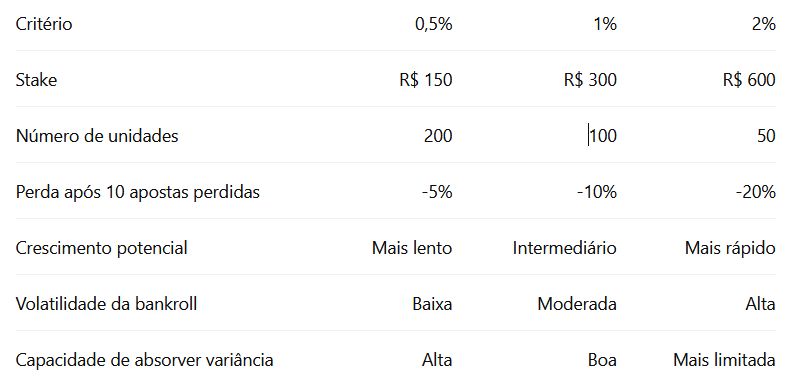
Essa comparação mostra que não existe uma opção sem contrapartida.
Reduzir a stake diminui o risco, mas também desacelera o crescimento potencial.
Aumentar a stake pode acelerar o crescimento, mas amplia os drawdowns.
E o critério de Kelly?
Existe um método matemático para determinar o tamanho da aposta com base na vantagem estimada e nas odds:
o critério de Kelly.
Diferentemente de uma regra fixa como 1% ou 2%, Kelly ajusta teoricamente a stake de acordo com o Expected Value da aposta.
Quanto maior a vantagem estimada, maior pode ser a stake recomendada.
Mas existe uma dificuldade importante:
Kelly depende diretamente da precisão com que a probabilidade real é estimada.
Se a vantagem for superestimada, Kelly pode recomendar stakes excessivamente altas.
Por isso, alguns apostadores preferem utilizar:
Half Kelly
ou:
Quarter Kelly
para reduzir a volatilidade.
Vamos dedicar um artigo específico a esse método mais adiante na série.
O perigo de aumentar a stake depois de uma perda
Um dos piores hábitos de gestão é alterar o tamanho da stake em reação aos resultados recentes.
Por exemplo:
1U
depois de perder:
2U
depois:
4U
e depois:
8U
Essa lógica corresponde a diferentes formas de martingale ou chasing de perdas.
O problema é simples:
o risco aumenta justamente quando a bankroll está diminuindo.
Isso é o oposto de uma gestão racional de capital.
O tamanho da stake deveria depender de:
capital, estratégia e risco
e não de:
frustração causada pelo resultado anterior.
Uma stake menor pode produzir resultados melhores no longo prazo
Pode parecer contraditório.
Uma stake menor gera, obviamente, menos lucro em cada aposta vencedora.
Mas também permite:
- suportar mais perdas;
- reduzir drawdowns;
- manter a disciplina;
- permanecer ativo por mais tempo;
- dar mais tempo para uma verdadeira vantagem estatística se manifestar.
Em alguns casos, uma estratégia financiada de forma agressiva demais pode falhar antes que sua vantagem estatística tenha tempo suficiente para aparecer.
Portanto, a pergunta não deveria ser apenas:
“Qual stake maximiza meu lucro?”
Mas:
“Qual stake permite maximizar o crescimento sem assumir um risco excessivo de perder meu capital?”
Então, quanto devemos apostar por aposta?
Não existe uma resposta universal.
Mas podemos estabelecer uma referência prática.
0,5%
Abordagem conservadora.
Pode ser especialmente interessante para:
- estratégias voláteis;
- odds altas;
- grande incerteza sobre a vantagem estimada;
- carteiras com várias estratégias.
1%
Abordagem equilibrada e referência utilizada nesta série.
Permite trabalhar com:
100 unidades
e oferece uma leitura muito clara do risco.
2%
Abordagem bem mais dinâmica.
A bankroll contém apenas:
50 unidades
Os drawdowns se tornam significativamente maiores.
Esse tamanho de stake exige uma compreensão melhor do perfil estatístico da estratégia.
Mais de 2%
O risco aumenta rapidamente.
Isso não significa que qualquer stake acima de 2% seja automaticamente irracional.
Mas quanto maior for a stake, mais importante será ter:
- uma estimativa confiável da vantagem;
- uma compreensão precisa da variância;
- uma visão clara dos drawdowns possíveis;
- forte disciplina de gestão de risco.
Apostar arbitrariamente 5% ou 10% da bankroll por aposta pode transformar rapidamente uma estratégia lucrativa em uma gestão de capital perigosa.
Conclusão
Definir o tamanho da stake é uma das decisões mais importantes na gestão de bankroll.
Com nossa bankroll de referência de:
R$ 30.000
uma stake de:
0,5% = R$ 150
1% = R$ 300
2% = R$ 600
5% = R$ 1.500
gera perfis de risco completamente diferentes.
Uma stake maior acelera os lucros quando os resultados são favoráveis.
Mas também amplia perdas e drawdowns pelo mesmo mecanismo.
Portanto, a pergunta não deveria ser apenas:
“Quanto posso ganhar?”
Também deveria ser:
“Qual sequência de perdas minha bankroll consegue suportar?”
Nesta série, continuaremos utilizando:
Bankroll: R$ 30.000
1U: R$ 300
1U = 1% da bankroll inicial
Essa base nos permite agora avançar para um conceito diretamente ligado ao tamanho das apostas:
Flat Betting.
Por que alguns apostadores profissionais preferem apostar sempre a mesma unidade, em vez de alterar a stake de acordo com o nível de confiança?
É isso que analisaremos no quarto artigo.
FAQ: Quanto apostar por aposta nas apostas esportivas?
Qual percentual da bankroll devo apostar por aposta?
Não existe um percentual universal adequado para todas as estratégias. O tamanho da stake depende de fatores como odds, variância, vantagem estimada e nível de risco aceito. O 1% é uma boa referência para entender a gestão de bankroll, mas não é automaticamente ideal em todas as situações.
Apostar 1% da bankroll por aposta é uma boa escolha?
O 1% é uma referência relativamente equilibrada para gestão de risco. Com uma bankroll de R$ 30.000, isso significa R$ 300 por aposta e 100 unidades de capital. O tamanho realmente adequado depende do perfil estatístico da estratégia.
Apostar 2% da bankroll é arriscado?
Uma stake de 2% dobra as oscilações em comparação com uma stake de 1%. Com uma bankroll de R$ 30.000, dez perdas com stakes fixas de R$ 600 resultariam em uma perda de R$ 6.000, ou 20% do capital inicial. O risco aumenta significativamente.
Posso apostar 5% da bankroll por aposta?
É possível, mas é extremamente agressivo para muitas estratégias. Com stakes fixas equivalentes a 5% do capital inicial, dez perdas representam 50% da bankroll inicial. Esse nível de exposição exige uma compreensão muito sólida de variância e risco.
É melhor apostar 0,5% ou 1% da bankroll?
Depende do perfil de risco desejado. Uma stake de 0,5% reduz drawdowns e aumenta a capacidade de suportar variância, mas desacelera o crescimento potencial. Uma stake de 1% aumenta o potencial de crescimento, mas também as oscilações.
Devo apostar mais quando estou muito confiante em uma aposta?
A confiança subjetiva, por si só, não é suficiente para determinar o tamanho da stake. Um aumento deveria idealmente ser baseado em uma estimativa mensurável de vantagem e risco, e não apenas no nível de convicção do apostador.
Devo aumentar a stake depois de uma perda?
Não, não simplesmente porque a aposta anterior foi perdida. Aumentar a stake para recuperar perdas corresponde a uma lógica de chasing ou martingale e pode acelerar significativamente a deterioração da bankroll.
Na mesma categoria
Education
Por que dobrar o valor da aposta após uma perda é uma estratégia ruim?
Terça-feira, 6 de outubro de 2026
Você possui uma Bankroll de R$ 30.000. Sua regra habitual é simples: 1U = R$ 300 Ou seja: 1% da sua Bankroll. Você faz uma aposta de R$ 300. Ela é perdida. Nesse momento, uma ideia pode parecer atraente: dobrar o valor da próxima aposta para recuperar a p...
Ver o artigoEducation
É preciso reduzir as apostas depois de uma sequência negativa?
Terça-feira, 29 de setembro de 2026
Você possui uma Bankroll de R$30.000. Sua regra inicial é simples: 1U = R$300 ou seja: 1% da sua Bankroll. Sua Strategy funciona bem há vários meses. Então chega um período difícil. Você perde: -5U depois: -10U e, finalmente, seu Drawdown chega a: -15U Su...
Ver o artigoEducation
É preciso aumentar as apostas quando a Bankroll cresce?
Domingo, 27 de setembro de 2026
Você começa com uma Bankroll de R$ 30.000. Sua regra é simples: 1U = R$ 300 ou seja: 1% da Bankroll inicial. Depois de alguns meses, seus resultados são positivos e sua Bankroll chega a: R$ 33.000 depois: R$ 36.000 e talvez: R$ 45.000. Nesse momento, surg...
Ver o artigoA Bet2Invest não é uma casa de apostas e não oferece serviços de apostas esportivas. No entanto, seu conteúdo está relacionado a atividades de apostas.
O jogo é estritamente proibido para menores de idade. Jogue com responsabilidade — o jogo excessivo pode causar perdas financeiras, dívidas ou dependência.